
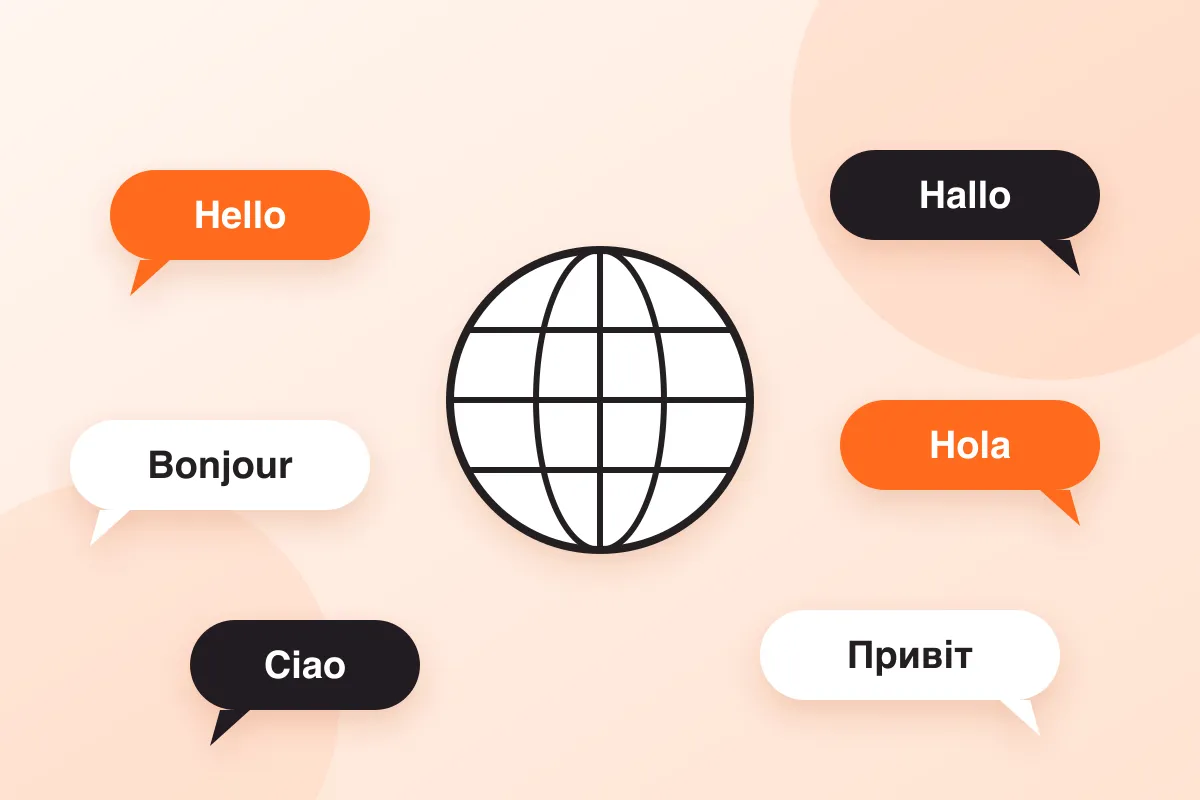
A website in several languages sounds big, but for many small businesses it is within reach. My own site runs in seven languages, and the Villa Vredestein site in six. Here is what I learned.
Do you really need it?
Start by asking who your visitors are. Do you rent out a holiday home to German or French guests? Then a site in their own language works far better than English alone. Do you run a local business for Dutch clients? Then one language is enough and saves money and upkeep.
The technical side
- A separate URL per language, for example
/en/about, so Google can find each version. - Hreflang tags, so search engines know which language version suits which visitor.
- A language switch on the site itself that remembers the choice.
- Translated titles and descriptions, not just translated pages.
A common mistake is translating only the visible text. Then the title in Google stays Dutch and the foreign visitor never reaches your page.
Translating: what AI does, what I do
AI makes the first translation and saves a lot of time. Then I check tone and technical terms. For a holiday home or a practice that difference matters: a text should sound warm and natural, not like a translation machine. If you don't speak a language yourself, always have a native speaker read along.
I lived in Munich myself and did an internship in France when I was 16. That left me with a small group of lasting friends I am still in touch with, which is how I keep my German and French alive. It helps in my work: I hear at once when a sentence is correct but doesn't sound like something a person would really say. Forms of address, idioms and tone (Sie or du, vous or tu) are not something you learn from a dictionary. For those two languages I can check things myself instead of relying on the translation alone.
What it costs
Every extra language means more text to translate, check and keep up to date later. That is why I include multilingual work in the quote, usually with fully custom builds or a site with CMS. A second language is manageable. Six languages needs a proper set-up. My rates are on the Pricing page.
The Villa Vredestein example
Villa Vredestein in Driebergen hosts guests from several countries, which is why its website runs in six languages. Read the story in Villa Vredestein: a house with a story or see the project.
My advice
Start with the language of your most important group of visitors, do it well, and add languages later when you see demand. A half translation is worse than none.